
Polish Study: Alarming EMF Effects on Bees
Natures mighty pollinating army of bees is being decimated by us and the electro magnetic radiation we generate
NTKP note:
The number of bees and insects have declined all over the world over in recent years. Many members of the scientific community have been shouting from the rooftops about the effects of human civilisation’s increasing use of electro magnetic radiation for communication. Our phones, cell towers, wi-fi and comms paraphanalia are having a detrimental effect on Bees and all living things.
Original Bee/EMF Study Link: https://pubmed.ncbi.nlm.nih.gov/37172069/
V/m stands for volts per meter, which is the unit of measurement for electric field strength. It indicates the amount of electric force experienced by a unit charge in a given electric field. - Duck Duck Go Search Assist, - Wikipedia
Editorial extract below from FaceBook Channel: Facts Fusion: This extract is not part of the Polish Study
“An absolutely chilling study from Wroclaw University in Poland just revealed 900 MHz radiofrequency radiation (the same frequency used by most cell phones) can cause severe nutritional collapse in honey bees after just one hour of exposure.
These bees, which pollinate over one-third of our global food supply, showed signs of cellular starvation even at radiation levels well below current safety standards.
Researchers exposed bees to three levels of radiation: 12 V/m, 28 V/m, and 61 V/m. Shockingly, at the lowest level (12 V/m), bees suffered a 59% drop in essential proteins, extreme glucose swings from +60% to -47%, triglyceride disruption, and weakened antioxidant defenses.
In just one hour, their internal systems crashed. Normally, bees regulate energy with precision. But, with radiation exposure, their glucose levels spiked and crashed uncontrollably like their metabolic GPS was scrambled. It was not just behavioral change, it was nutritional chaos at the cellular level.
What is even more alarming is that these effects occurred at 1,000 times below the so-called “safe” radiation threshold. According to Dr. Migdal and his team, “Radiofrequency electromagnetic fields disturb honey bees after nutrition. The changes may have long term effects.” Facts Fusion

Study Title and Abstract
Exposure to a 900 MHz electromagnetic field induces a response of the honey bee organism on the level of enzyme activity and the expression of stress-related genes
Pawel Migdal 1, Paweł Bieńkowski 2, Małgorzata Cebrat 3, Ewelina Berbeć 1, Mateusz Plotnik 1, Agnieszka Murawska 1, Przemysław Sobkiewicz 2, Agnieszka Łaszkiewicz 3, Krzysztof Latarowski 4
Affiliations expand
PMID: 37172069
PMCID: PMC10180655
Abstract
There are many artificial sources of radiofrequency electromagnetic field (RF-EMF) in the environment, with a value between 100 MHz and 6 GHz. The most frequently used signal is with a frequency of around 900 MHz. The direction of these changes positively impacts the quality of [Human] life, enabling easy communication from almost anywhere in the world.
All living organisms in the world feel the effects of the electromagnetic field on them.
The observations regarding the influence of a RF-EMF on honey bees, describing the general impact of RF-EMF on the colony and/or behavior of individual bees, such as:
reduction in the number of individuals in colonies
extended homing flight duration
decrease in breeding efficiency
changes in flight direction (movement of bees toward the areas affected by RF-EMF)
increase in the intensity and frequency of sounds characteristic for those announcing the impending danger.
In this work, we describe the changes in the levels of some of the stress-related markers in honey bees exposed to varying intensities and duration of RF-EMF. One-day-old honeybee worker bees were used for the study.
The bees were randomly assigned to 9 experimental groups which were exposed to the following 900 MHz EMF intensities: 12 V/m, 28 V/m, and 61 V/m for 15 min, 1 h and 3 h.
The control group was not exposed to the RF-EMF.
Each experimental group consisted of 10 cages in which were 100 bees. Then, hemolymph was collected from the bees, in which the activity was assessed AST, ALT, ALP, GGTP, and level of nonenzymatic antioxidants albumin, creatinine, uric acid, and urea. Bees were also collected for the analysis of rps5, ppo, hsp10, hsp70, hsp90, and vitellogenin gene expression. Our study shows that exposure to a 900 MHz electromagnetic field induces a response in the honey bees that can be detected in the level of enzyme activity and the expression of stress-related genes. The response is similar to the one previously described as a result of exposition to UVB irradiation and most likely cannot be attributed to increased temperature.
Copyright: © 2023 Migdal et al. This is an open access article distributed under the terms of the Creative Commons Attribution License, which permits unrestricted use, distribution, and reproduction in any medium, provided the original author and source are credited.
Conflict of interest statement
The authors have declared that no competing interests exist.
Figures
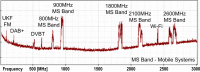
Fig 1. Electromagnetic spectrum used by major…
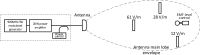
Fig 2. Exposure setup scheme with EMF…
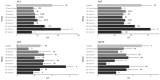
Fig 3. Activity of enzymes in the…
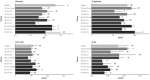
Fig 4. Level of biochemical markers in…
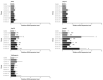
Fig 5. Relative expression of stress-related genes…
Similar articles
Radio-Frequency Electromagnetic Field Exposure of Western Honey Bees.
Thielens A, Greco MK, Verloock L, Martens L, Joseph W.Sci Rep. 2020 Jan 16;10(1):461. doi: 10.1038/s41598-019-56948-0.PMID: 31949179Free PMC article.
Cordelli E, Ardoino L, Benassi B, Consales C, Eleuteri P, Marino C, Sciortino M, Villani P, H Brinkworth M, Chen G, P McNamee J, Wood AW, Belackova L, Verbeek J, Pacchierotti F.Environ Int. 2024 Mar;185:108509. doi: 10.1016/j.envint.2024.108509. Epub 2024 Feb 19.PMID: 38492496
Pelletier A, Delanaud S, Décima P, Thuroczy G, de Seze R, Cerri M, Bach V, Libert JP, Loos N.Environ Sci Pollut Res Int. 2013 May;20(5):2735-46. doi: 10.1007/s11356-012-1266-5. Epub 2012 Nov 10.PMID: 23143821
Migdał P, Murawska A, Bieńkowski P, Strachecka A, Roman A.PLoS One. 2021 Jun 24;16(6):e0252858. doi: 10.1371/journal.pone.0252858. eCollection 2021.PMID: 34166412Free PMC article.
Low-level exposure to radiofrequency electromagnetic fields: health effects and research needs.
Repacholi MH.Bioelectromagnetics. 1998;19(1):1-19.PMID: 9453702Review.
Cited by
Bryś MS, Olszewski K, Strachecka A.PLoS One. 2025 Jun 18;20(6):e0326175. doi: 10.1371/journal.pone.0326175. eCollection 2025.PMID: 40531859Free PMC article.
Changes in Selected Biochemical Markers of Honey Bees Exposed to Fermented Common Tansy Solution (Tanacetum vulgare L.).
Białecka N, Garbacz K, Berbeć E, Murawska A, Madras-Majewska B, Migdał P.Animals (Basel). 2024 Oct 4;14(19):2857. doi: 10.3390/ani14192857.PMID: 39409806Free PMC article.
Šofranková L, Baňas M, Pipová N, Majláth I, Kurimský J, Cimbala R, Zbojovský J, Šimo L, Majláthová V.Parasitol Res. 2024 Aug 21;123(8):306. doi: 10.1007/s00436-024-08326-7.PMID: 39167261Free PMC article.
Electromagnetic Interference in the Modern Era: Concerns, Trends, and Nanomaterial-Based Solutions.
Prekodravac Filipovic J, Milenkovic M, Kepic D, Dorontic S, Yasir M, Nardin B, Jovanovic S.Nanomaterials (Basel). 2025 Oct 13;15(20):1558. doi: 10.3390/nano15201558.PMID: 41149527Free PMC article.Review.
Effects of Electromagnetic Radiation on Neuropeptide Transcript Levels in the Synganglion of Ixodes ricinus.
Šofranková L, Baňas M, Pipová N, Majláth I, Kurimský J, Cimbala R, Pavlík M, Mateos-Hernández L, Šimo L, Majláthová V.Pathogens. 2023 Nov 28;12(12):1398. doi: 10.3390/pathogens12121398.PMID: 38133283Free PMC article.
References
Chiaramello E, Bonato M, Fiocchi S, Tognola G, Parazzini M, Ravazzani P, et al. Radio frequency electromagnetic fields exposure assessment in indoor environments: A review. Int J Environ Res Public Health. 2019;16. doi: 10.3390/ijerph16060955 - DOI - PMC - PubMed
Frei P, Mohler E, Bürgi A, Fröhlich J, Neubauer G, Braun-Fahrländer C, et al. A prediction model for personal radio frequency electromagnetic field exposure. Sci Total Environ. 2009;408: 102–108. doi: 10.1016/j.scitotenv.2009.09.023 - DOI - PubMed
IEEE_SCC39. IEEE Standard for Safety Levels with Respect to Human Exposure to Electric, Magnetic, and Electromagnetic Fields, 0 Hz to 300 GHz—Corrigenda 2. IEEE Std C95.1-2019/Cor2-2020 (Corrigenda to IEEE Std C95.1–2019). 2020.
ITU-R. IMT Vision–Framework and overall objectives of the future development of IMT for 2020 and beyond. Recomm Itu-R M2083-0. 2015;0: 1–21. Available: https://www.itu.int/dms_pubrec/itu-r/rec/m/R-REC-M.
Ziegelberger G, Croft R, Feychting M, Green AC, Hirata A, d’Inzeo G, et al. Guidelines for limiting exposure to electromagnetic fields (100 kHz to 300 GHz). Health Physics. 2020. doi: 10.1097/HP.0000000000001210 - DOI - PubMed
Show all 26 references : (https://pubmed.ncbi.nlm.nih.gov/37172069/)
NTKP note: To read the following sections please go to the original article: https://pubmed.ncbi.nlm.nih.gov/37172069/
Publication types
Research Support, U.S. Gov’t, Non-P.H.S.
Research Support, Non-U.S. Gov’t
MeSH terms: Medical Subject Headings, nlm.nih.gov/mesh
Controlled vocabulary for the purpose of indexing journal articles and books in the life sciences
Animals
Antioxidants
Bees / genetics
Electromagnetic Fields* / adverse effects
Quality of Life*
Radio Waves / adverse effects
Uric Acid
Substances: nlm.nih.gov/mesh
Antioxidants
Uric Acid